
No Contest
March 18, 2026
Fr. John Riccardo
Jesus told her, “I am the resurrection and the life; whoever believes in me, even if he dies, will live, and everyone who lives and believes in me will never die. Do you believe this?” (John 11:25-26).
I have long fed on the inspirational writing, preaching and teaching of Fleming Rutledge. Bishop Robert Barron first made me aware of her in a review he wrote of her monumental book The Crucifixion: Understanding the Death of Jesus Christ. I often return to that book in my prayer and spiritual reading at this time of year, as well as another gem called The Undoing of Death: Sermons for Holy Week and Easter. With the Gospel account of Jesus’ raising of Lazarus from the dead put on the table this coming Sunday for us to feast on, I have been lingering with the following lengthy excerpt from Rutledge. I pray it will be as edifying and inspiring for you as it is for me.
I don’t know how many of you have had an experience of actual death in front of your very eyes. One does not forget one’s first time. I had never seen a dead body until I was .. in my mid-thirties and was called to come to the bedside of a dying man. He was lying on the sofa in the living room with his family around him. While I was saying the prayers for the dying, he drew his last breath. I will never forget the shock of seeing the change that came over his body. Something enormous and alien had entered the room. The undertakers arrived. The family left the room. I stayed because I felt that someone should be present. The way they handled the body gave me a second shock. They were not rough, exactly, but they were certainly businesslike. They spread out a rubber sheet on the floor, hoisted the body off the sofa and down onto it, wrapped it up and carried it off as if it were nothing more than a sack of garden mulch. Twenty minutes before, there was a live human being who would have been moved only with the greatest care and delicacy; now there was nothing but an object to be disposed of as quickly as possible.
Death has a horrible color; I have seen it many times since. Death has a terrible icy feel, too. Not long after this episode I was asked by a parishioner to slip a ring onto the finger of the corpse of his dead wife. I had never done anything like that before. I had heard of rigor mortis but I had never touched it. I was not prepared; it was all I could do to perform my task. The hand did not feel like anything human. For any person who values warm human contact, the difference between a living hand and a dead hand is frightful.
The reason I am talking about death in such stark terms is that the Bible talks about it. Death is one of the main characters in the Biblical drama. Death stalks around everywhere, threatening to destroy everything. The Bible is blunt about death. “He stinketh, for he has been dead four days” (John 11:39). Earlier generations were not as squeamish about depicting death as we are; look closely the next time you see a Greek or Russian icon of the raising of Lazarus. The bystanders are holding handkerchiefs to their noses. Death was a visible, smellable fact of life for Biblical people and, indeed, for all people everywhere until about a hundred years ago when we started calling in the morticians to hustle the bodies out of sight. … Not so in these tender-minded times. Our culture is infamous for its unceasing attempts to manage death, to get it out of sight, to perfume it and embalm it and cover it with flowers, but the truth remains.
The entire human person lives under the sway of Death. It is the reigning phenomenon of our existence. Lay theologian William Stringfellow writes,
Death survives all other powers, apart from God, in this world.… Death is the obvious meaning of existence, if God is ignored, surviving as death does every other personal or social reality to which is attributed existence in this world. Death is so great, so aggressive, so pervasive and so militant a power that the only fitting way to speak of death is similar to the way one speaks of God. Death is the living power and presence in this world which feigns to be God.…
So I think we do God great honor to speak with awe and reverence of Death tonight. Death is “the last enemy” of man and God (1 Corinthians 15:26). … The Corinthian congregation’s problem was that they did not understand what was owing to death. They would have loved “The American Way of Death.” Just like us, they wanted to hustle death offstage; they preferred to think of death as a mere blip on the screen of immortality. The entrance of Christ into the world, they believed, meant that death had been made irrelevant. Paul wrote to correct them. Death, he said, was the last and greatest antagonist of all. Death is the one great, overwhelming, final reality of human existence: “In Adam, all die” (1 Corinthians 15:22).
There can be no true proclamation of the Resurrection until there has been an acknowledgement of the power and the finality of Death. It is indeed “the obscene mystery, the ultimate affront, the thing that cannot be controlled.”
Everything I know about grief and mourning tells me that when someone we love dies, we cannot go on with our lives in a healthy way unless we come to terms with the fact of that person’s death. We often need to prolong or postpone the process, so that we will not be overwhelmed all at once, but sooner or later we must face it. Death is ugly, a rotten deal; it is a cheat, a thief, a grinning mockery—like a skull. In the story of Lazarus, we see Jesus face to face with that reality.
John repeats three times that Jesus “wept” and was “deeply troubled.” Interpreters have long seen that this is more than grief for Lazarus; this perturbation of spirit is caused by the presence of the Great Antagonist. God is revealing, through the Son, that he hates Death and pities us because we must bow our necks under its terrible stroke. Jesus is deeply moved in spirit because he is gathering his forces for this mighty confrontation with the “exceeding great power,” the Supreme Enemy of all that God has purposed. This is a truly cosmic duel.
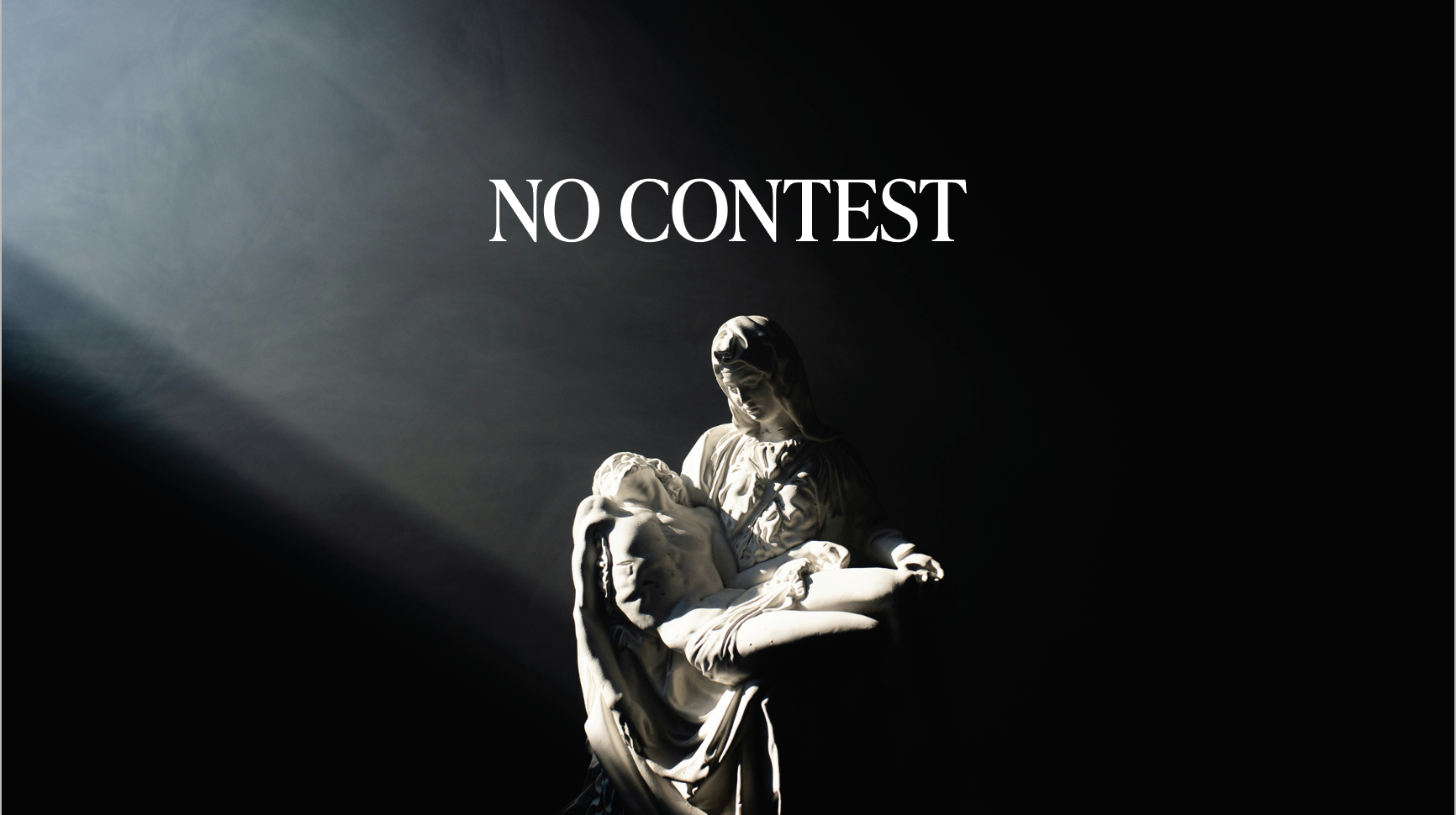
But in the end it is no contest.
In the midst of life we are in death: dust we are, and to dust we shall return. There we remain unless there is an intervention from beyond this world order. Only a Power greater than that of Death can countermand that strict arrest.
When Jesus Christ the Son of God steps forward to the door of Lazarus’ tomb and speaks, it is the same voice that was heard at Creation: “Let there be light!” and there was light. Did the light have any choice about the matter? Could the light have said “No”? In the words that open John’s Gospel, we see with perfect plainness how the Incarnate Son is One with the Creator and the Spirit invoked in the beginning of the book of Genesis: “In the beginning was the Word, and the Word was with God, and the Word was God. He was in the beginning with God; all things were made through him, and without him was not anything made that was made” (John 1:1–3). This is the Word that raises the dead and calls into existence the things that do not exist. This is Jesus Christ, the Word Incarnate who “dwelt among us, full of grace and truth” (1:14). We pathetic human creatures preen and pose, defying Death with our illusions of immortality, but we are helpless …
But now, dearly beloved of God and of his Son Jesus Christ, hear this news: Descending from the realm of light and life, invading the impenetrable darkness of the kingdom of Death and plundering it of all its treasure, comes One “who is and who was and who is to come, the Almighty” (Revelation 1:8). To his infinitely precious children by baptism and the Holy Spirit he says, “I am the resurrection and the life; he who believes in me, though he were dead, yet shall he live; and he who lives and believes in me shall never die” (John 11:25–26). He is the Alpha and the Omega, the root and the offspring of David, the bright morning star, risen with healing in his wings: Wonderful Counselor, the Mighty God, the Everlasting Father, the Prince of Peace.”
After telling Martha who in fact He was and what He can do, He asked Martha the life-changing question: “Do you believe this?” He asks the same of me and you right now.
Fleming Rutledge, “The Undoing of Death (Wednesday of Easter Week),” in The Undoing of Death: Sermons for Holy Week and Easter (Grand Rapids, MI; Cambridge, U.K.: William B. Eerdmans Publishing Company, 2005)..

ACTS XXIX Prayer Intentions
March 2026
For the Church in this season of Lent, that God would create within us a clean heart so that at Easter we may shine ever more brightly as a sign of His love to a world longing for Him.
For those traveling from across the country to participate in our Leadership Immersives, that all of us who gather may be open to the renewal of our minds and be reconfigured ever more to Jesus for mission.
For our ongoing ministry in the Diocese of Orange, California, that we remain attentive to the voice of God and faithfully bless what He has entrusted to us.
For the Jesus Conference, that as we gather in October as God’s family, as His sons and daughters, may be open to all the Father desires to speak, and be sent forth in His power to gather His scattered children.
For our Episcopal Advisory Council, Board of Directors, and faithful friends in mission, that they would know the Father’s delight, grow ever more deeply in His love, and know our heartfelt gratitude for their friendship.