
You Can’t Even Have Him
April 8, 2026
Fr. John Riccardo
“For the Son of Man came to seek and save the lost.” Luke 19:10
“For God did not send His Son into the world to condemn the world, but in order that the world might be saved through Him.” John 3:17
God our Savior “desires all people to be saved and to come to the knowledge of the truth.” 1 Timothy 2:3-4
“That reminds me of the story of the conversion of the commandant of Auschwitz.”
So said a dear friend of mine almost offhandedly at dinner several years ago now. “Excuse me?” I said. “The commandant of Auschwitz repented.” “Uh, I don’t think so,” I answered in my stupidity, thinking to myself, “Surely, if that happened I would know about it.” “I’m pretty sure he did,” she gently pushed. “I’ll send you the story.”
And what a story it is!
As we celebrate this coming Sunday the Feast of Divine Mercy, I am lingering once again with this extraordinary testimony to God’s grace and mercy, a testimony that shows God wants all of His children back, even those who have done horrific, barbaric, unspeakable acts of evil.
The commandant of Auschwitz was a man named Rudolph Hoess. Hoess grew up in a very strict Catholic family. His father desired him to become a priest, and he perhaps entertained the idea himself when he was a boy. However, in his adolescence, he suspected a priest friend of the family violated the seal of confession and told his parents something he had confessed. As a result, he made a decision to never trust a priest again. Soon thereafter, he renounced his Catholic faith entirely. Hoess served in World War I and proved himself a leader of men, greatly respected by his brothers in arms. After the War, he married, and began to raise a family when he was recruited by the Nazi party to implement their demonic plan to eradicate those they considered “unworthy of life,” most especially, though not only, the Jewish people. He began his “career,” at Dachau, then moved on to another camp, and finally became the commandant of Auschwitz from 1940-1943, and again for a brief time in 1945. He was responsible for the extermination of nearly 3,000,000 people. The prisoners in Auschwitz called him “the animal.”
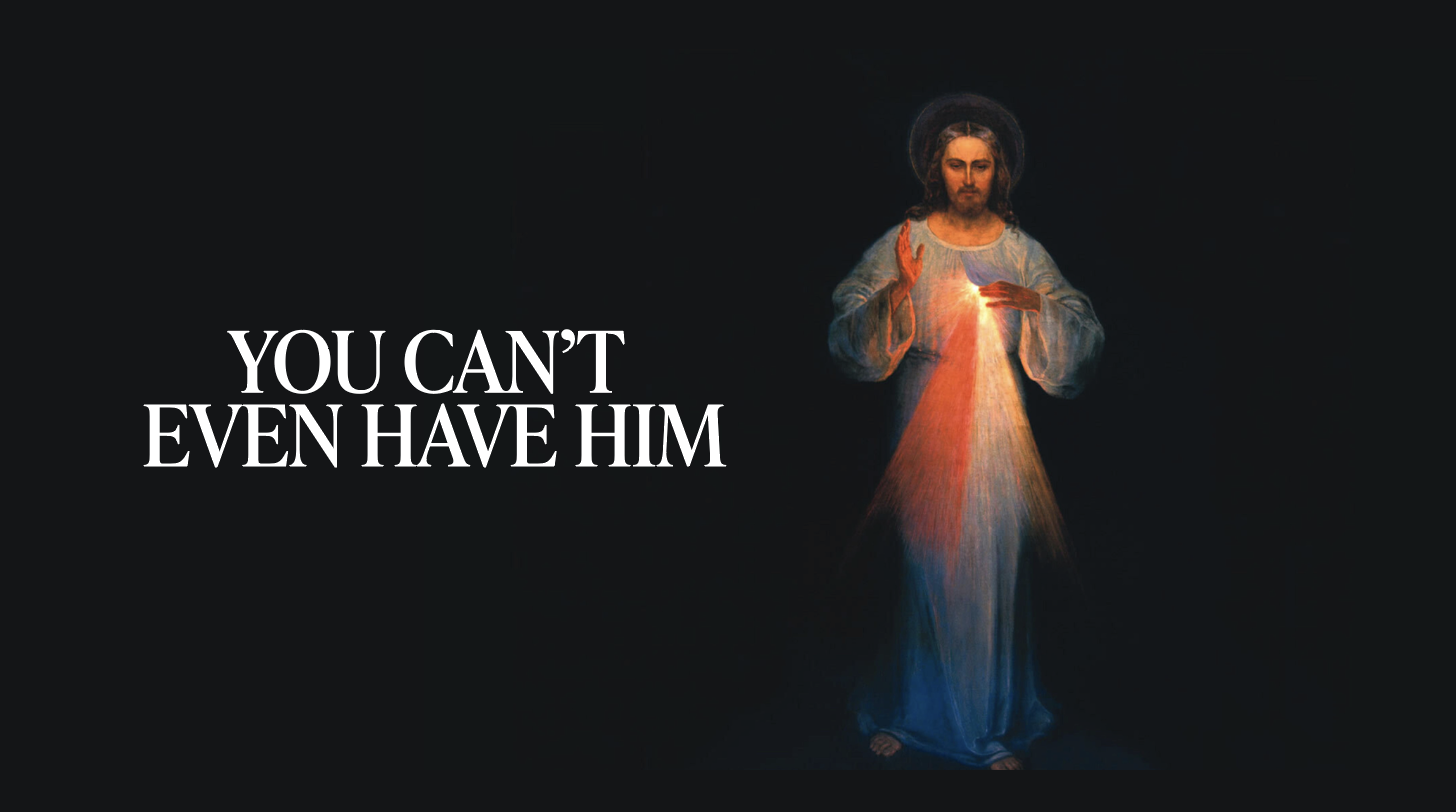
The Nazis eliminated all those they could track down who were influential in a community. This included clergy of all kinds, professors, and more. In the Polish city of Krakow, one day, the Gestapo came and arrested all of the Jesuits in the local house. All except one. Fr. Wladislaw Lohn, SJ, wasn’t in the house the day they came. Upon returning, he inquired of the neighbors where his brothers were and they informed him they had been arrested and sent to Auschwitz. Fr. Lohn then did the unimaginable: he broke into Auschwitz! The guards quickly spotted him and brought him to Hoess. The commandant asked him what he was doing there. The priest demanded Hoess release his Jesuits brothers. “Not a chance,” the commandant answered. “Then I want to die with them,” Lohn said. Hoess was so taken by this Jesuit priest’s courage that he kicked him out of the extermination camp.
Hoess and Lohn both survived the war. Hoess tried to evade capture but was finally apprehended by the British. Like so many other Nazi criminals, he was sent to Nuremberg. Pronounced guilty by the tribunal there, he was sent to Poland to be executed. He was sentenced to be hanged in the camp where he had overseen the murder of millions of men, women, and children. Before his execution, however, he was held in prison in a town called Wadowice — the birthplace of Karol Wojtyla, the future St. John Paul II.
Hoess knew he was to be hanged. He allegedly didn’t fear dying. What he did fear was being tortured, for he was back in Poland and many of the guards in the prison had once been in Auschwitz. For some reason, however, the treatment of the guards was not at all what he suspected. In his last testament Hoess recorded, “In Polish prisons I experienced for the first time what human kindness is. Despite all that has happened I have experienced humane treatment which I could never have expected, and which has deeply shamed me.” Perhaps this kindness was a means for God’s amazing grace to begin to crack open his heart. For some mysterious reason, on April 4, 1947, Hoess asked to see a priest who spoke German. It just happened to be Good Friday. As so many priests had been murdered, the guards weren’t able to find anyone. Suddenly, somehow, Hoess remembered the name of the man he had kicked out of Auschwitz. “Find Fr. Wladislaw Lohn,” he pleaded with the guards.
It took six days, but on April 10, Easter Thursday, the guards found Fr. Lohn. He just happened to be praying before the image of Divine Mercy at the convent where Sr. Faustina had lived. That same day, the man who had been miraculously freed from hell on earth was an instrument of God’s scandalous mercy to deliver a man from hell itself. Lohn heard “the animal’s” confession. He returned the next day to bring Hoess Holy Communion. The guards present said that the former commandant cried like a child as he received Jesus hidden under the appearance of bread.
This story, once unknown to me, continues to be the most powerful testimony of God’s mercy I have ever heard. When I first heard it, it was as if I could see Hoess, this man who had done such unspeakable evil, firmly in the hands of the one Jesus calls “the strong man,” that is, the devil. Slowly, as I watched, Jesus – the Stronger One – began to pull Hoess out of our enemy’s grip. As he did so, in my mind’s eye, our Risen Lord, the One who triumphed over Sin and Death, the one who is not only unconquerable and unrivaled but rich in mercy, said, “You. Can’t. Even. Have. Him.”
Christ is Risen! He is risen indeed! Let our hearts resound with praise to the One who was dead but is alive forever, and who holds in His hands the keys of death, hell and the grave. Let us take advantage of God’s great mercy by availing ourselves of the wondrous sacrament that is confession. And let us never despair of God’s desire to bring all of His children home.

ACTS XXIX Prayer Intentions
April 2026
For the Church, rejoicing in the victory of Jesus over sin, death, hell and Satan, that she may be renewed in hope, bold and prophetic in witness, and radiant with the joy of the Resurrection.
For priests going through moments of crisis in their vocation, that they may find accompaniment and that communities may support them with understanding and prayer.
For our time with the presbyterate in the Diocese of Gaylord, that the Holy Spirit would guide our ministry with them, deepen their unity as brothers, and reconfigure us ever more fully to the heart of Jesus for mission.
For our Board of Directors meeting, that the Lord would grant wisdom and clarity so that every decision made may serve His purposes and advance the Kingdom of God.
For all of our planning efforts around The Jesus Conference, that the Lord would go before us, preparing the hearts of those who will gather, and that this event would bear lasting fruit for the renewal and mobilization of the Church.
For our Episcopal Advisory Council, Board of Directors, partners, and all those who faithfully pray for us, that they may be strengthened by the gratitude and communion we share in the family of God.